

There is a great deal of Lotto on the 2026-27 range.
This is not a controversial statement. Anyone who has visited the club shop or looked on the website has felt it. But feeling is not measurement, and WombleWorld does not deal in feeling.
If we are to say that a shirt has A Lot of Lotto on it, we must first establish, formally, the threshold at which some Lotto becomes A Lot of Lotto.
No such figure currently exists. We have checked. There is no agreed threshold, at this club or any other, above which a garment may be officially described as carrying A Lot of Lotto. We consider this an oversight. We intend to correct it. So we formed a committee and commissioned a paper.
The range of Lotto under consideration
We begin at the bottom.
One Lotto is not A Lot of Lotto. A single diamond on the chest is the accepted, unremarkable minimum, the baseline against which all excess is measured. Nobody has ever looked at a shirt bearing one Lotto and remarked upon the quantity of Lotto.
Two is also not A Lot of Lotto. Two is a manufacturer being thorough. A chest and a sleeve. A chest and a tag. Nobody counts to two and stops, alarmed.
Somewhere above two, and below two hundred and ten, the situation changes. Our task is to find where.
The question of what counts
Before we can count, we must decide what counts.
There are Lottos woven into the inner collar tape of every shirt in the range, on a strip of fabric nobody will ever look at. There is a Lotto on the hem tag. There is a Lotto on the licensed-product label.
Do these count?
We have decided that they do. A Lotto is a Lotto. To exclude the collar tape on the grounds that it is hidden would be to introduce a subjective judgment about visible Lotto versus concealed Lotto, and once you are ranking Lotto by visibility you are no longer measuring Lotto.
You are measuring intent. That way lies madness. Every Lotto is counted. The rule is total and it is not negotiable.
A note on scope. All counts in this paper are of the adult short-sleeve versions. Long-sleeve garments differ, and not always upward: the long-sleeve home shirt in fact carries 30% fewer Lotto than the short, its narrow cuff replacing the wider band of the upper sleeve. This is the sort of thing this paper exists to know. Long-sleeve figures are reserved for future assessment.
The question of the word
A related matter, disposed of quickly.
Several items carry the word LOTTO, spelled out. It appears across the back of the tee. It appears, in wordmark form, on the pre-match shirts. The committee was asked whether the word counts.
It does not. This paper measures the diamond, and the diamond only. The word LOTTO is the manufacturer’s name, not its logo, and a standards body that counted both the name and the mark would be double-counting, and WombleWorld does not double-count. The word is noted, set aside, and excluded from all figures below.
The definitions
We are now able to define our terms. There are three.
Some Lotto. Five or fewer. A shirt operating at or near the accepted minimum. Unremarkable. The natural state of a football shirt.
Moderate Lotto. Six to forty-nine. A busy shirt. A shirt a person might describe, loosely, as having “a fair bit of Lotto on it,” while remaining, under this paper, below the threshold. Moderate Lotto may feel like A Lot of Lotto, particularly when prominently placed. It is not A Lot of Lotto. It is Moderate Lotto, and the distinction is the entire point of the exercise.
A Lot of Lotto. Fifty and above.
The figures are defensible and final. We are aware that they are arbitrary. All thresholds are arbitrary. That is what makes them thresholds and not observations.
The findings
The Home Shirt:
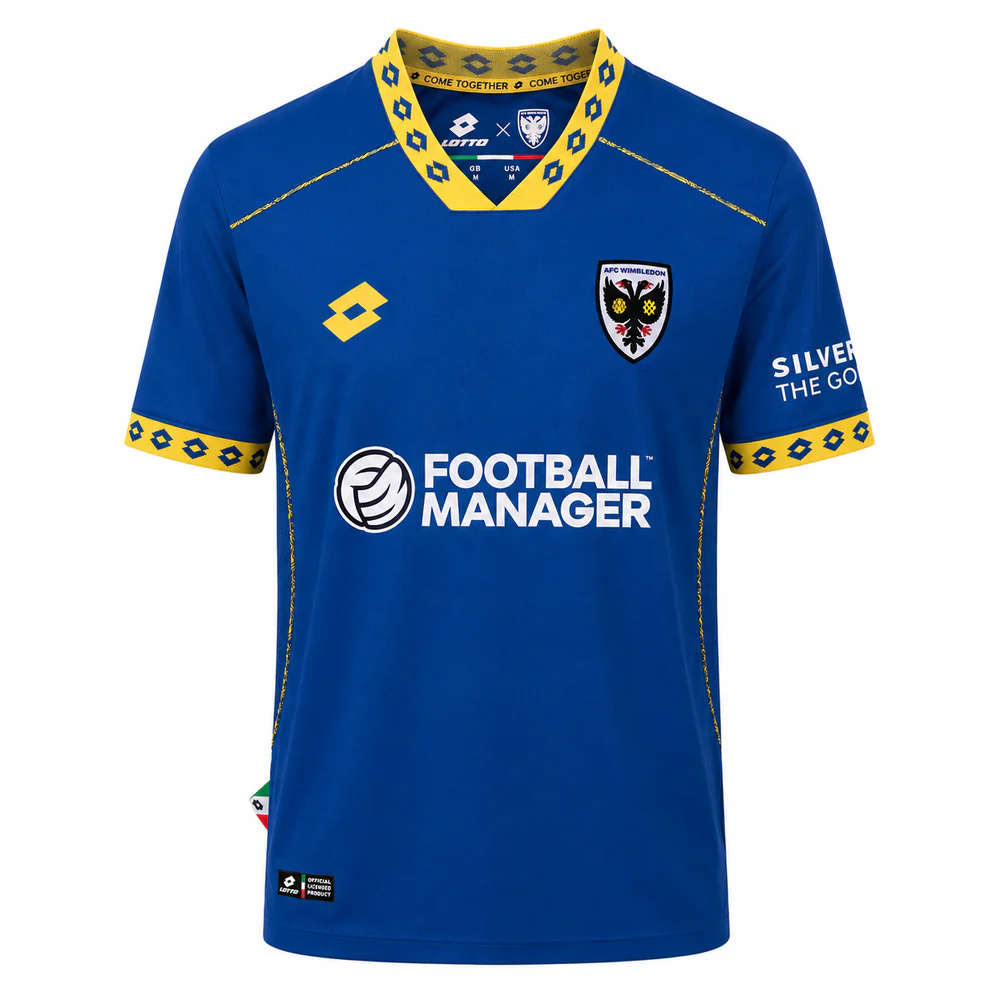
The home shirt carries forty-one Lotto. It falls into Moderate Lotto, and it falls there by nine.
This will surprise people, because the home shirt looks like A Lot of Lotto. The diamonds are on the front of you, at the chest and the cuff and the collar, in full view, and a Lotto in your eyeline reads as more than a Lotto in the dark. However we counted forty-one. And forty-one is Moderate Lotto.
We accept that it is a Moderate Lotto shirt that behaves like A Lot of Lotto, but you cannot argue with facts.
A note, outside scope. As mentioned earlier, this paper concerns itself with adult short-sleeve garments. During assessment, a member counted the infant home shirt unprompted, and we are obliged to record the result.
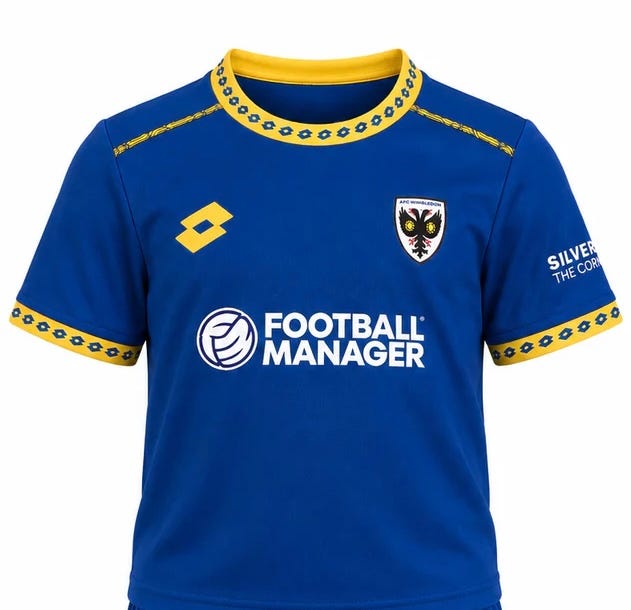
The infant home shirt carries sixty-seven Lotto. A 63% increase compared to the adult size. It is A Lot of Lotto. It is the only home shirt to cross the threshold, and it is the smallest garment in the range, worn by supporters who did not choose it and cannot count. The adult home shirt, several times larger, does not qualify. We have decided not to think about this any further, and we would advise the reader to do the same.
The T-shirt:
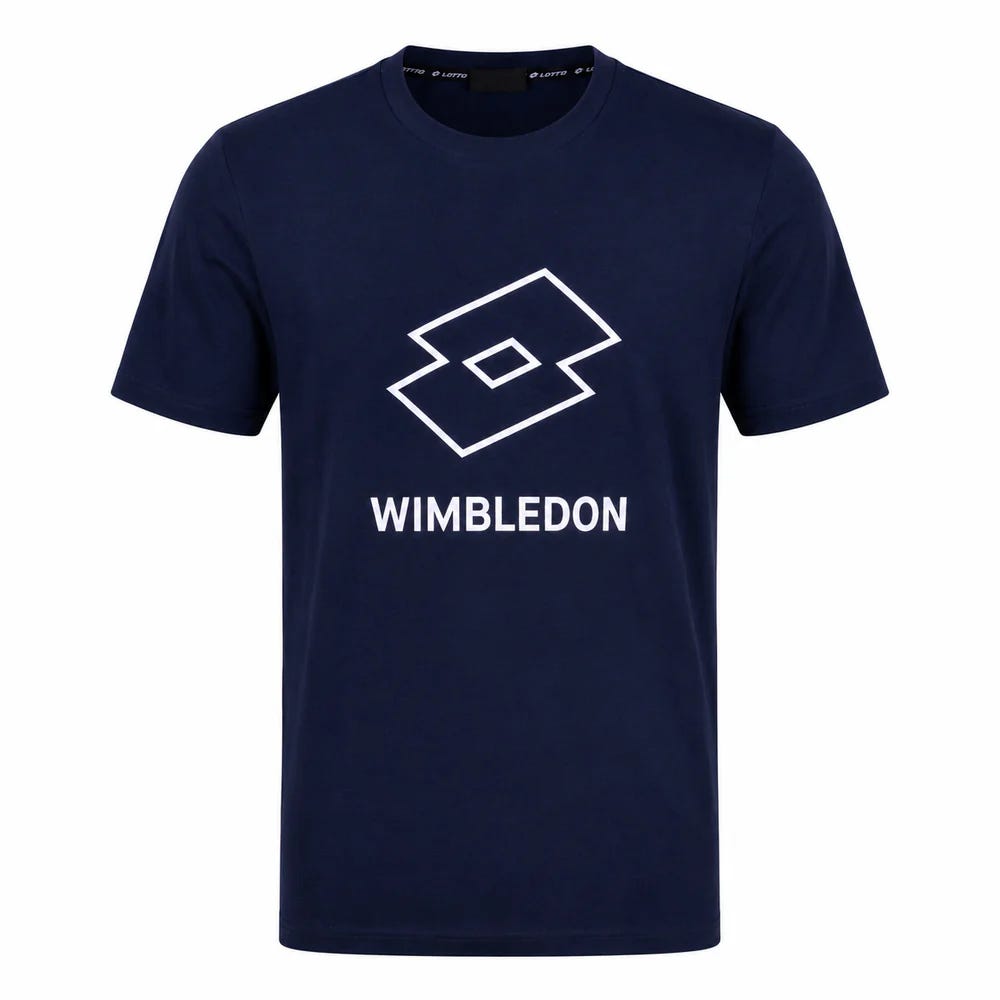
The Lotto tee is the difficult one.
On the outside it looks like Some Lotto, and almost is. One diamond on the front, one on the back. Two Lotto. A restrained garment.
It is not a restrained garment. The one on the front is the size of a dinner plate, bigger than any single Lotto anywhere else in the range, and possibly bigger than all two hundred and ten on the away shirt put together. And on the inside of the collar sit four more, which drag the tee across the line into Moderate Lotto with nobody on the outside any the wiser.
So the tee is Moderate Lotto. Six, officially, two of them visible, one of them enormous. We were asked to count Lotto, not to adjudicate prominence, and we have held to that, even here, where holding to it feels almost perverse. Whether a garment so thoroughly covered by so few Lotto ought to be judged by area rather than number is a strong argument, and a matter for another day.
The Away Shirt:
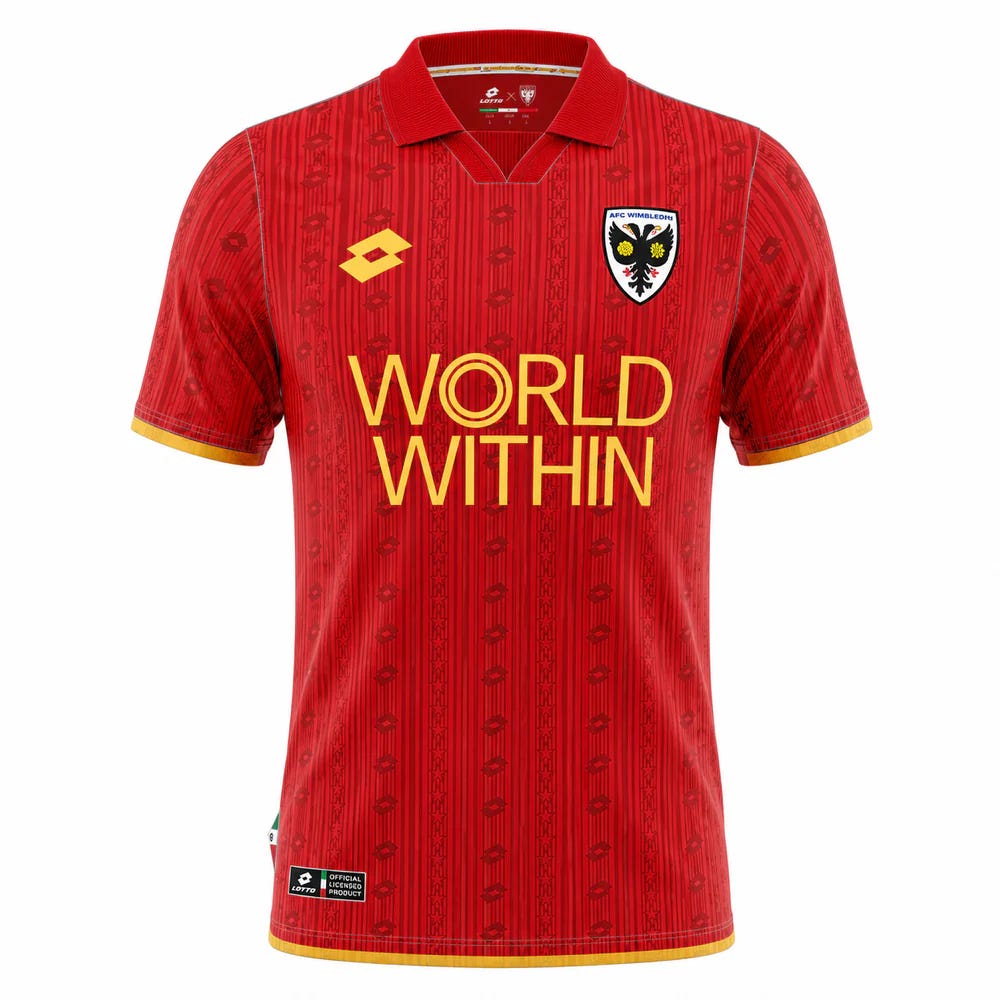
The away shirt carries two hundred and ten. One hundred and six on the front. Eighty on the back. Twelve on each sleeve. The diamond is not printed on this shirt but woven into it, in columns, collar to hem, so that the material of the garment is the logo of the manufacturer. We counted the front. We began counting the back. We finished the back some time later, in a changed mood.
Two hundred and ten is A Lot of Lotto. It is, in fact, A Lot of A Lot of A Lot of Lotto. On this the committee was unanimous, and immediate, and slightly shaken.
The Pre-match Shirt:
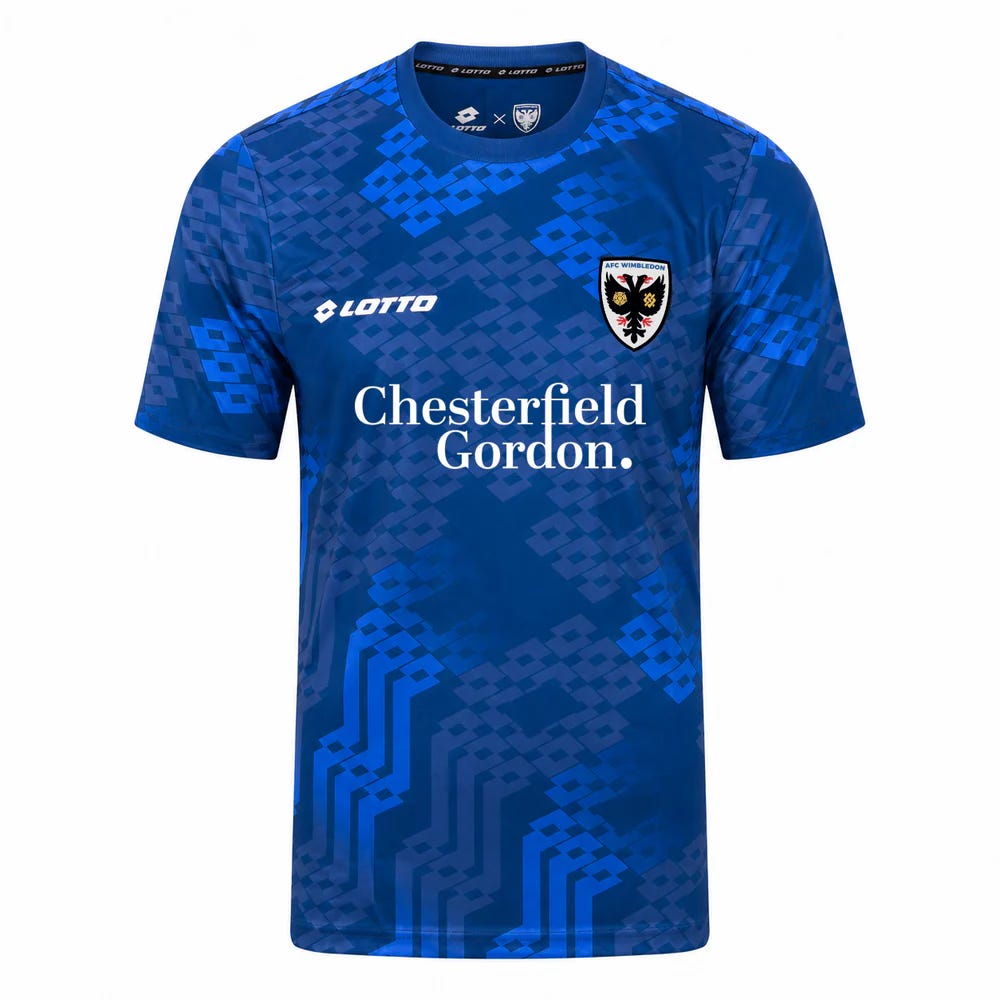
The pre-match tees could not be assessed. There are two problems and they compound.
The first is that the pattern is built from Lotto made of Lotto. The large diamonds in the design are themselves composed of small diamonds, so that any count depends first on agreeing what a single Lotto is, and we could not. Count the whole and you ignore the parts. Count the parts and you ignore the whole. Count both and you are counting the same Lotto twice, which this paper forbids.
The second is that the pattern then disintegrates. Toward the edges the diamonds break apart and scatter into shapes that are no longer quite Lotto, and the point at which a Lotto stops being a Lotto is not a point we were able to fix.
It resembles those puzzles, circulated on Facebook by your aunt, in which one is asked how many triangles are in the triangle. We do not know how many Lotto are in the Lotto. We suspect the manufacturer does not know either. A garment whose Lotto cannot be counted cannot be classified, and this one cannot be counted. It is unsatisfactory. It is suspected to be deliberate.
Closing Thoughts
We do not make this ruling in criticism.
Marc Jones has designed shirts for years and given us some of the best of them, and a man is entitled to weave two hundred and ten of his sponsor’s logos into a single garment if the mood takes him. We would rather have a designer who wants to do things than one who does not.
We simply believe that when a shirt crosses fifty Lotto, the supporter has a right to know. Informed consent. Nothing more.
The away shirt carries A Lot of Lotto. It is now official, and you may buy it in that knowledge, and you should, because we need to fund a replacement for Omar Bugiel.
WombleWorld
Robin Bedford has written to the manufacturer to ask whether there is an optimum Persil-to-Lotto ratio, one that delivers efficient cleaning and maximum brand awareness. He is awaiting a reply.